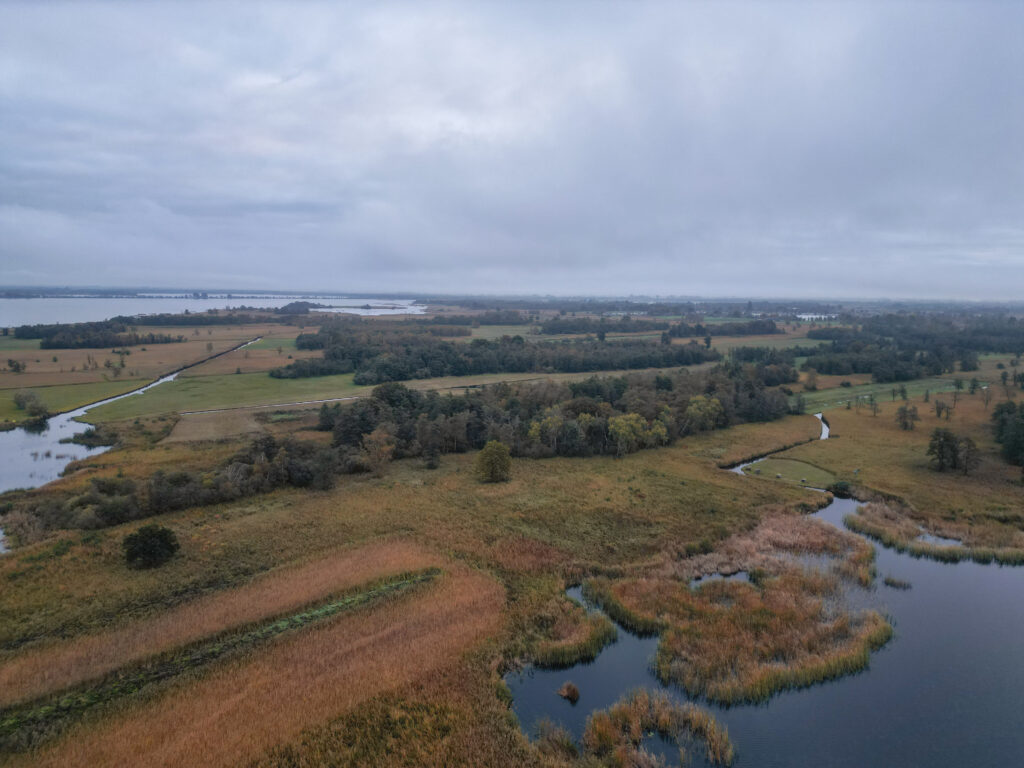
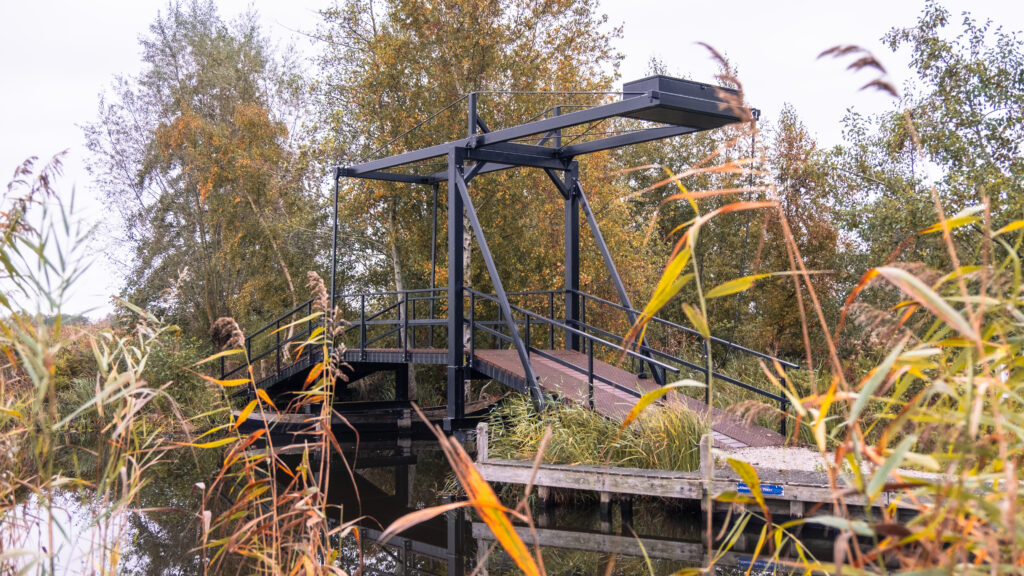
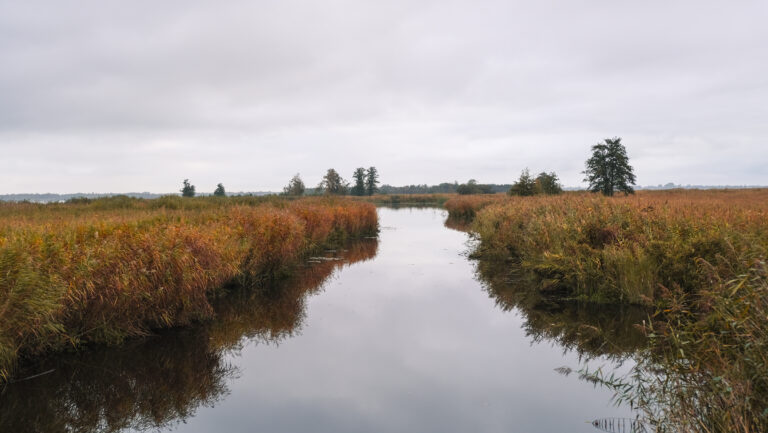
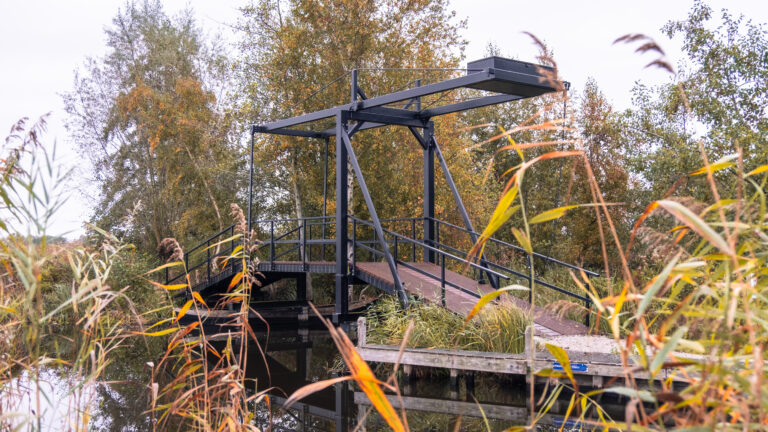
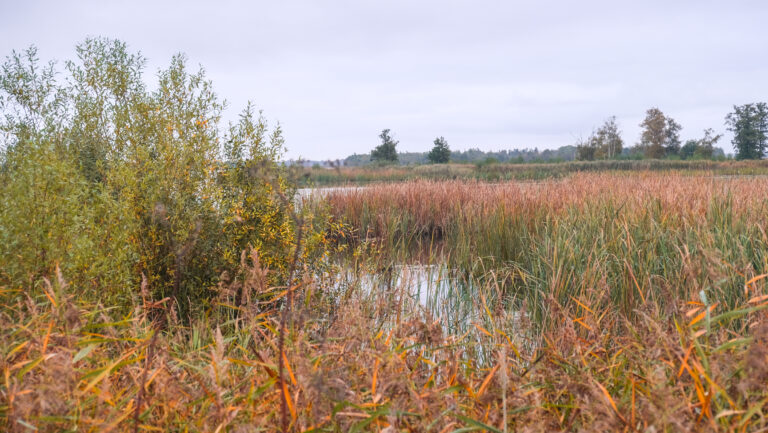
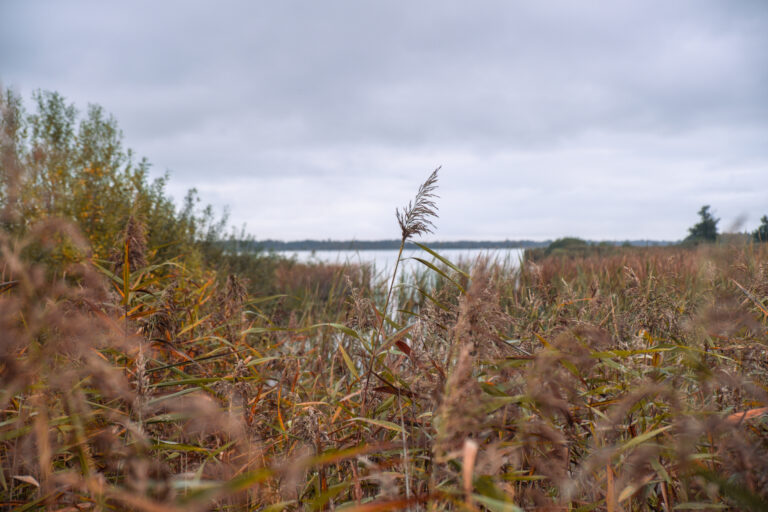
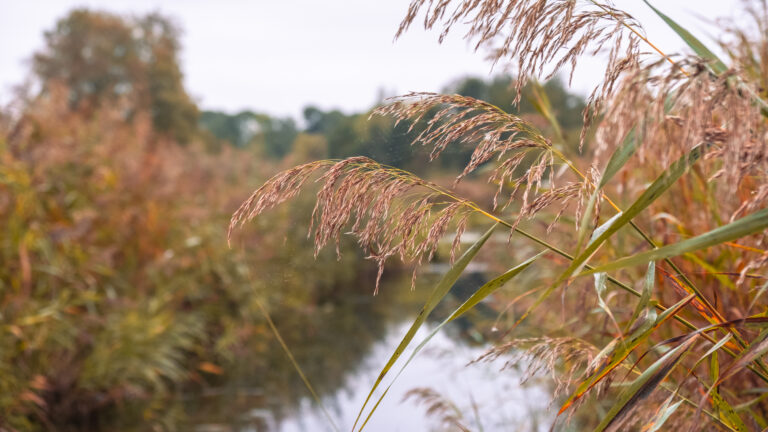
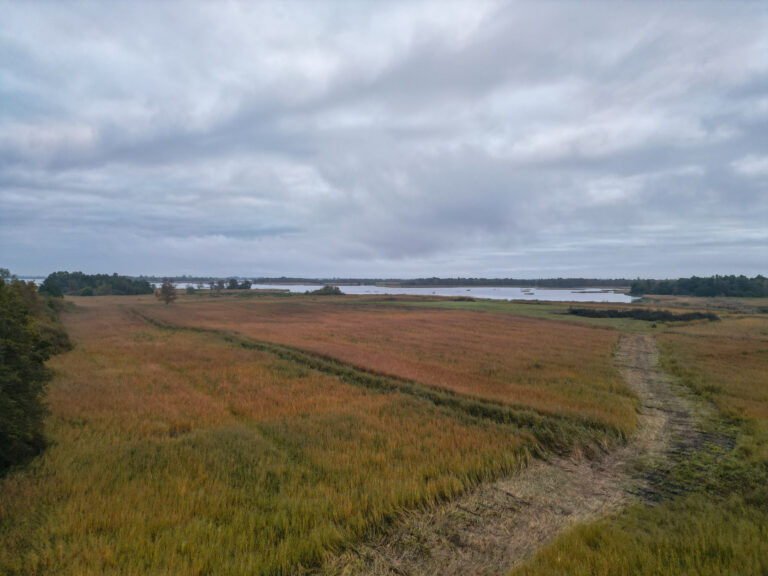
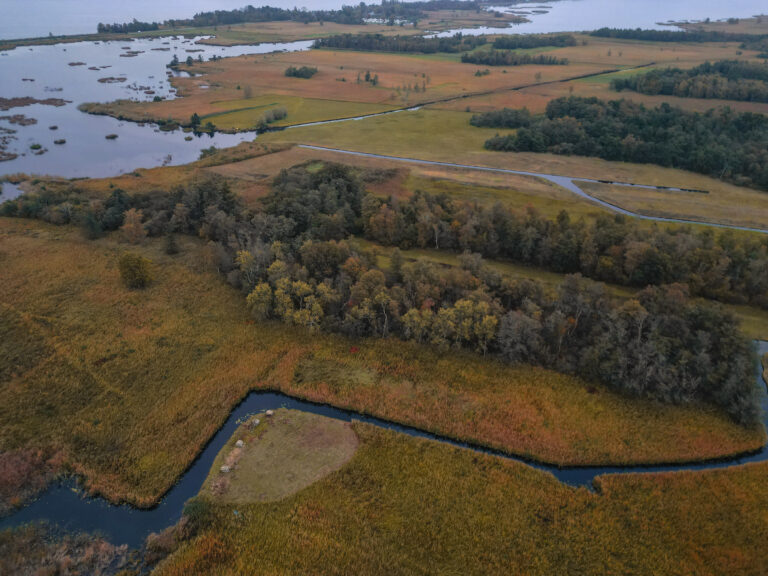
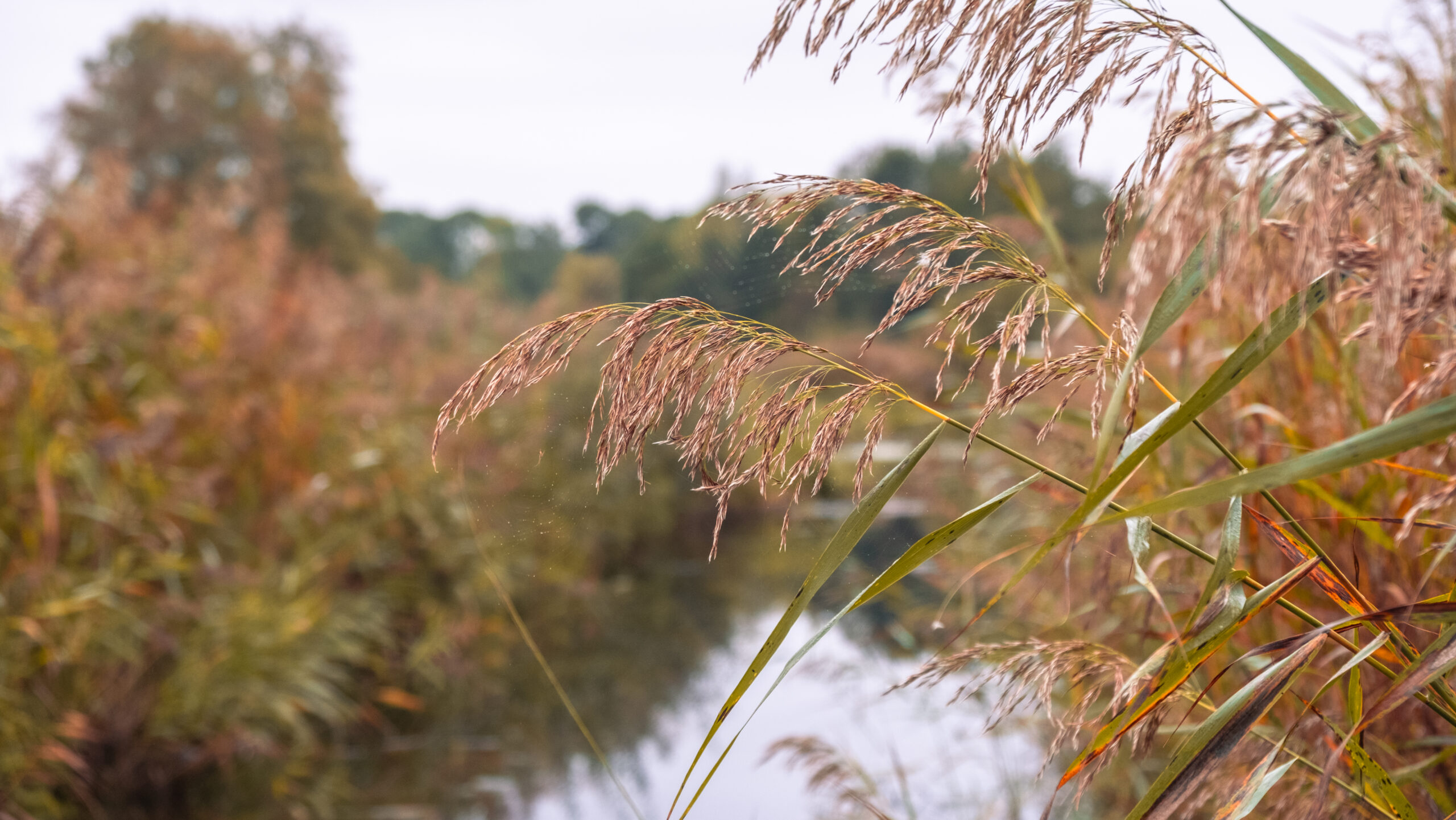
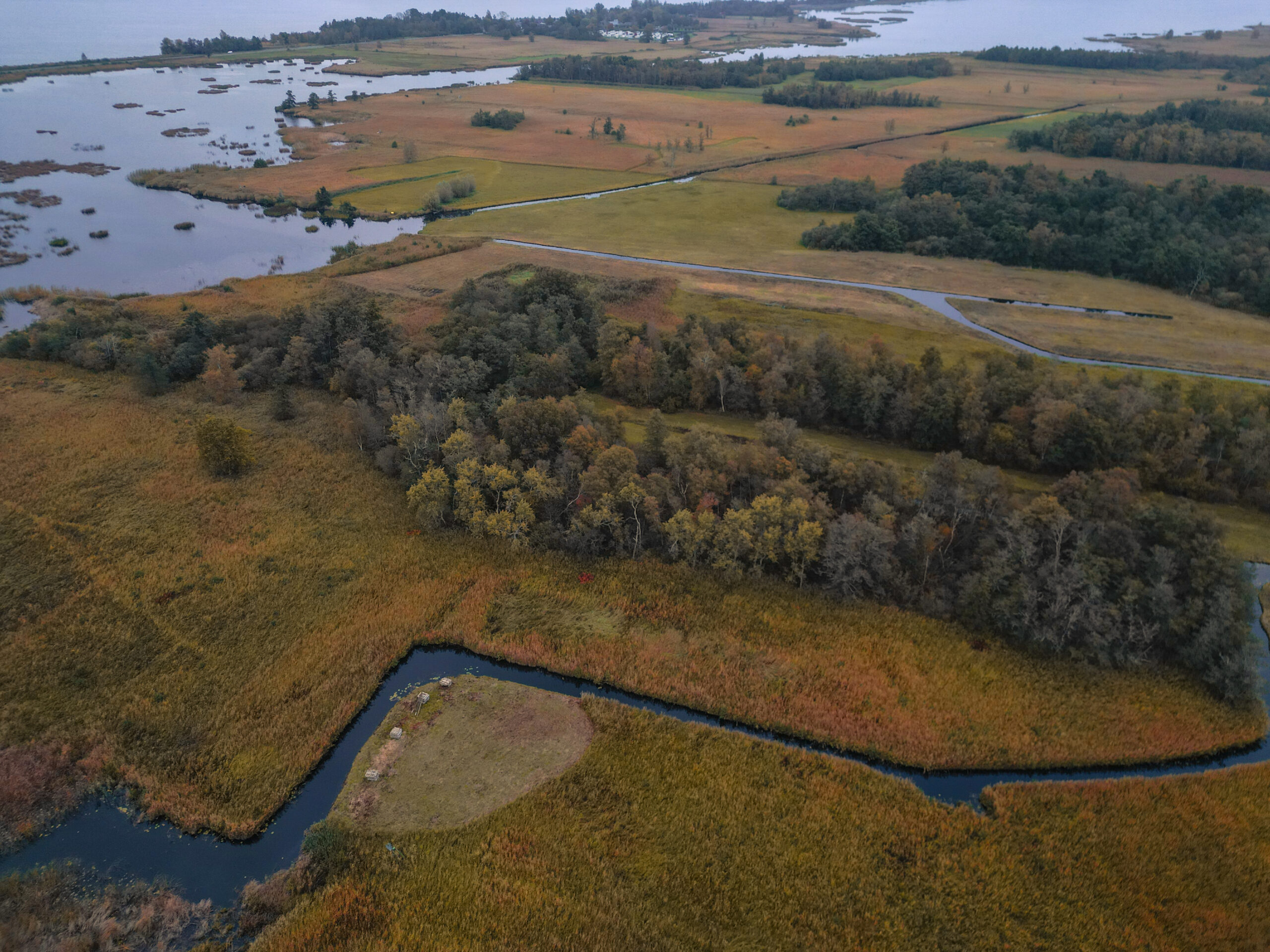
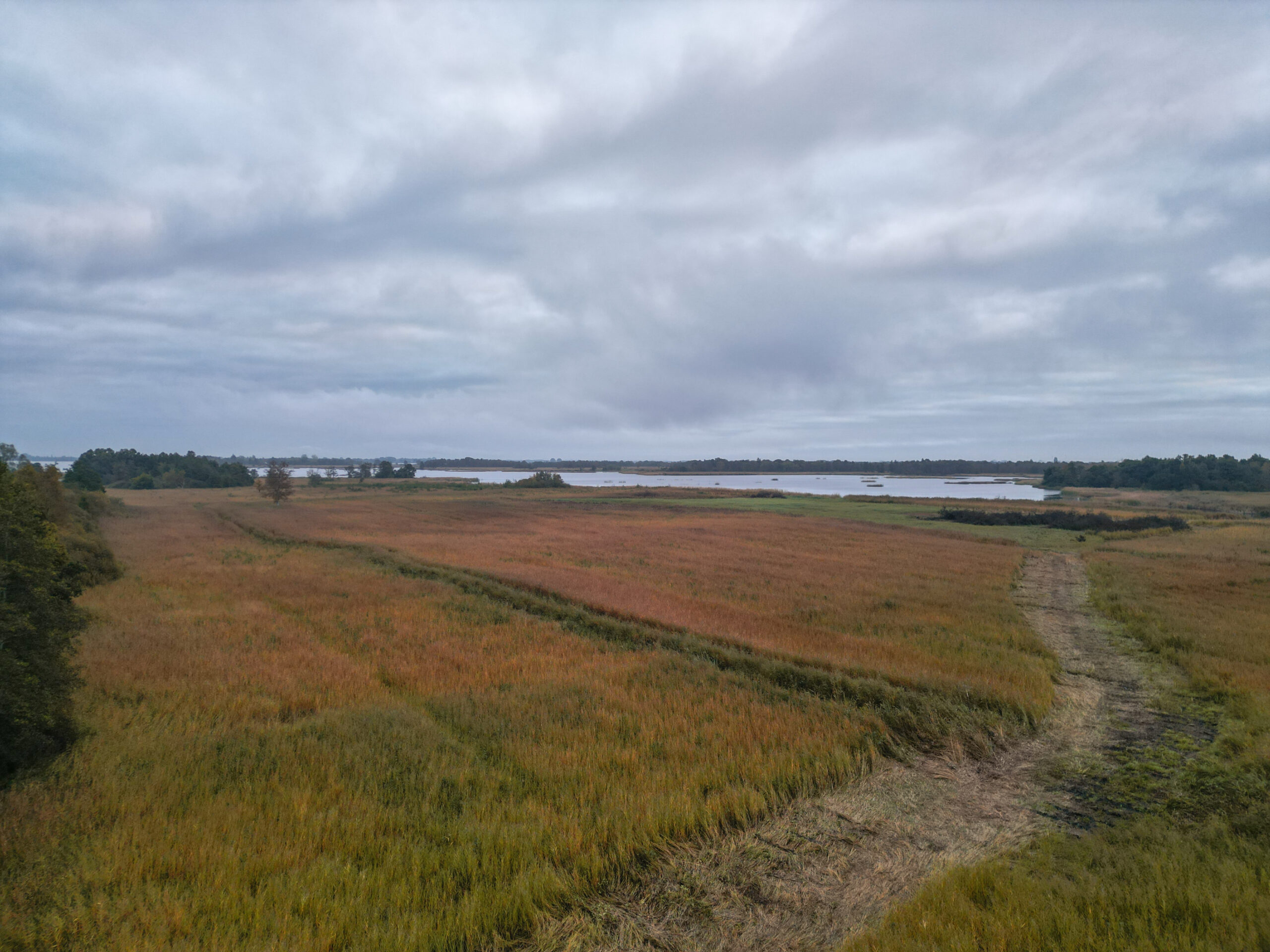
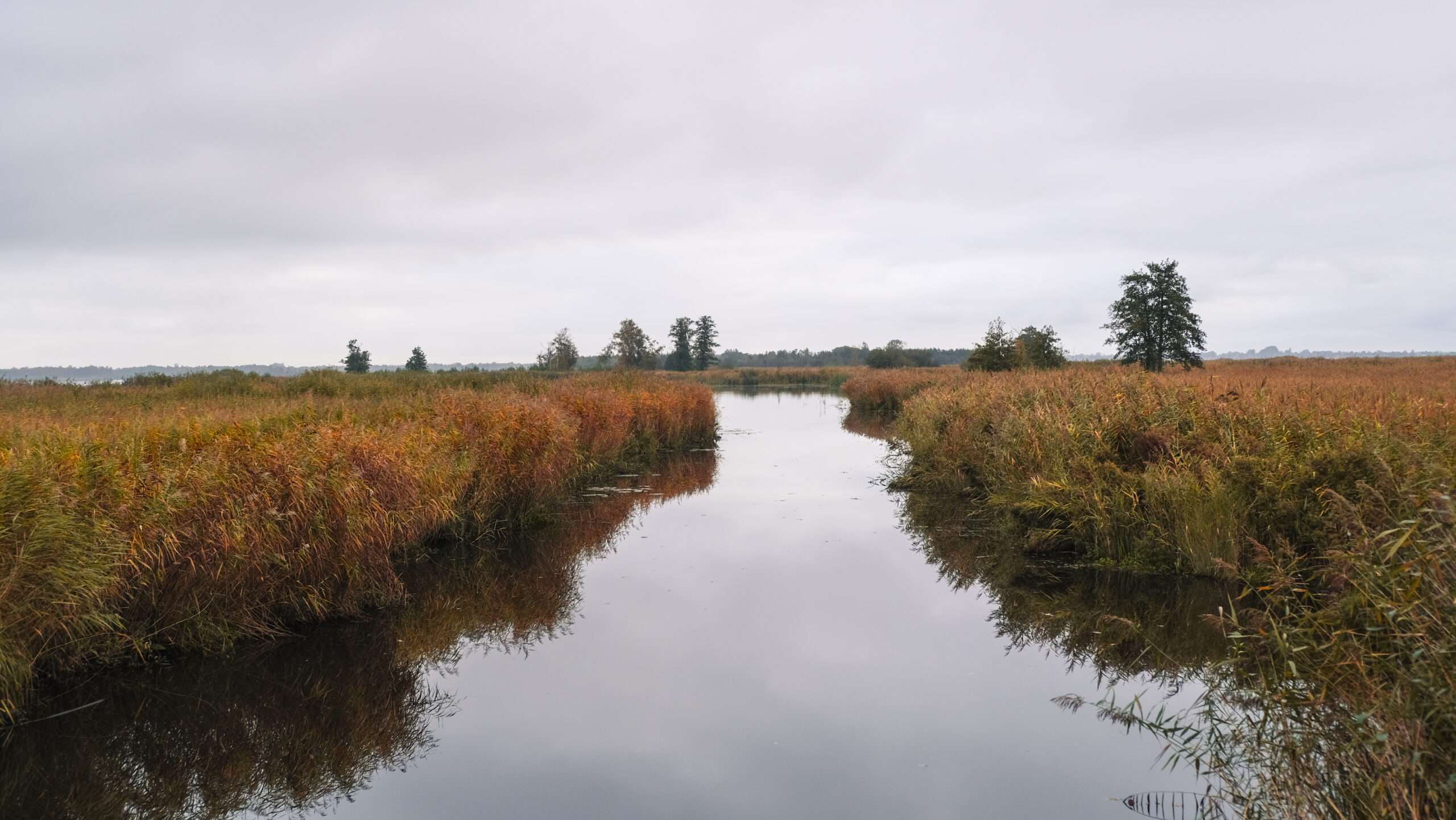
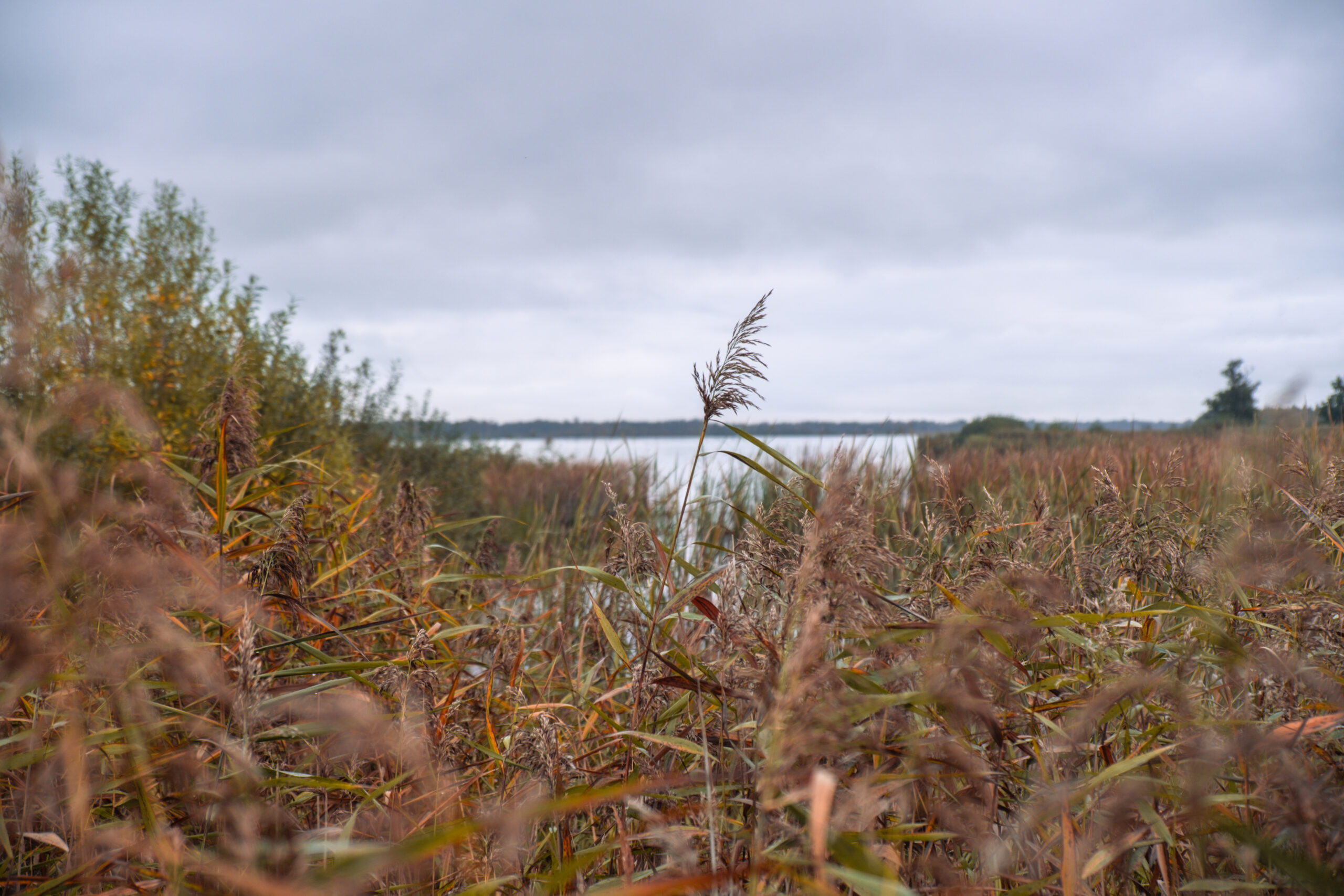
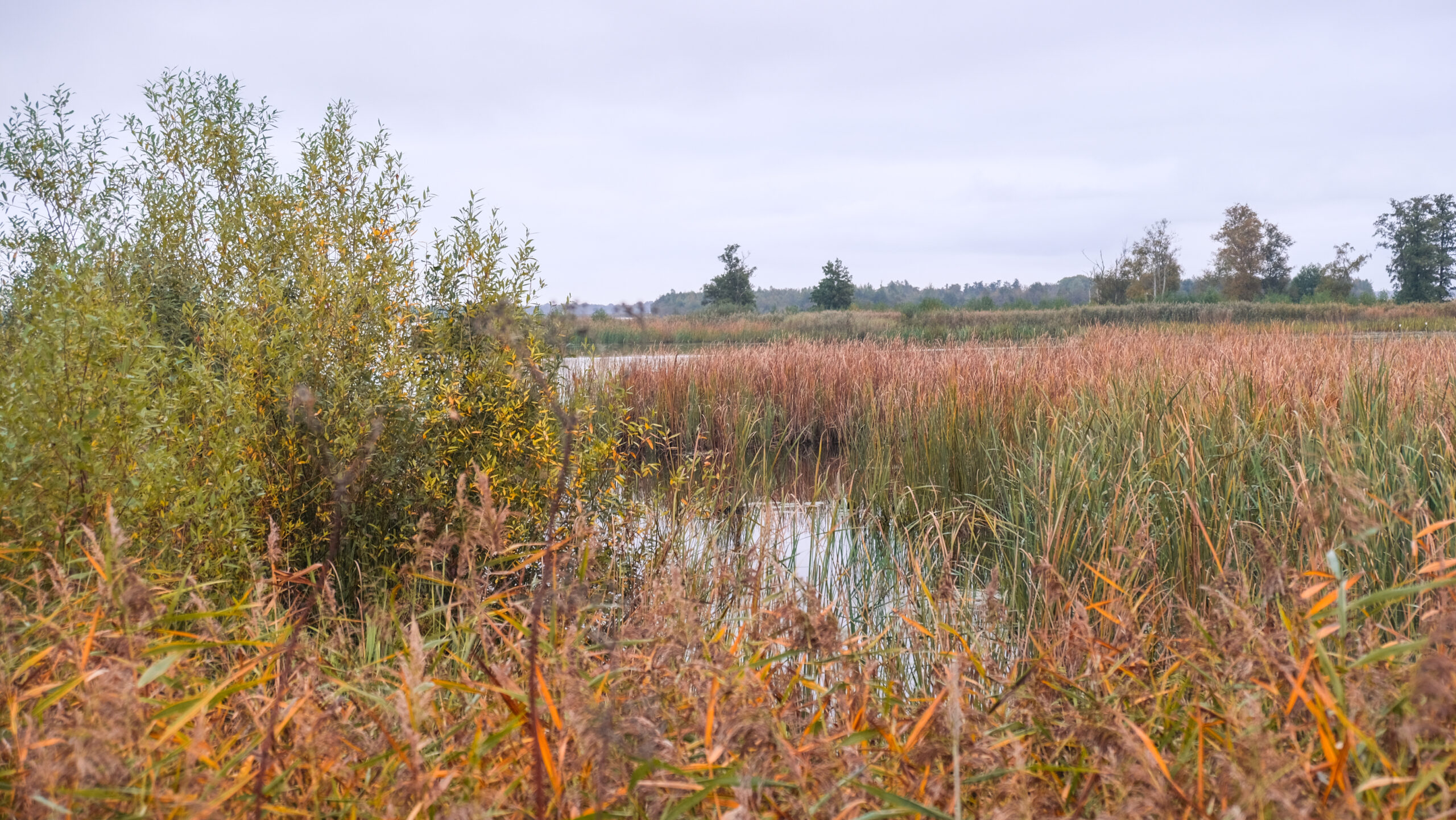
Between the reed collars, the rippling water and the vast horizon is one of the most special nature reserves in the Netherlands: De Wieden. A mosaic of lakes, vibrators, reed lands and swamp forest created by centuries of peat extraction and transformed by nature itself into a living low moor landscape.
But even the most beautiful landscapes sometimes need a helping hand. Over time, the old pet holes grow shut, the open water disappears and with it the living space for many plant and animal species. To restore that balance, we start the Petgaten De Wieden – 2nd period together with the Province of Overijssel and Natuurmonumenten.
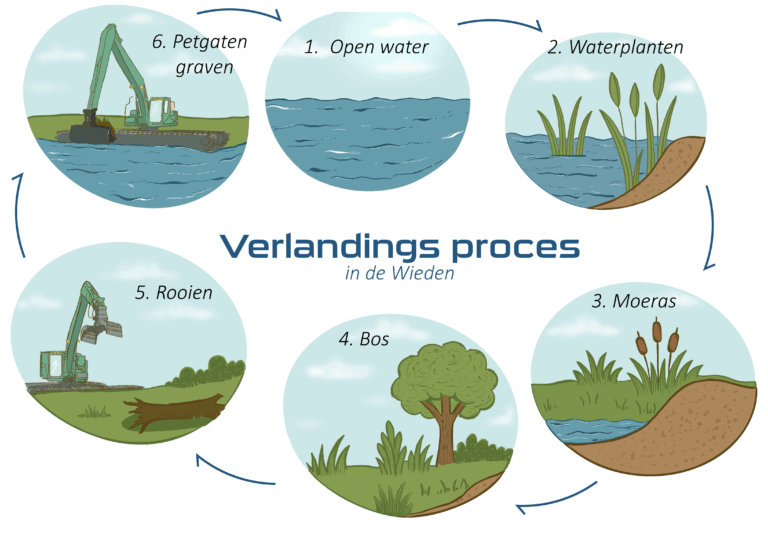
Anyone who sails over the water at Belt-Schutsloot or Giethoorn does not always see it directly, but a special process takes place under the reeds. This is called landing.
Open water changes step by step into floating peat, reed lands and ultimately swamp forest. That natural process is valuable, but when it happens everywhere at the same time, the variety that is so characteristic of De Wieden disappears.
This variety, from open water to swamp forest, is what makes the area rich in biodiversity. Otters find peace there, reed birds nest between the stems, and rare vibratory veins thrive on floating peat layers. To maintain that natural diversity, old pet holes must be dug open again. In doing so, we are restarting the landing cycle.
The work area is located south of the Belteruurde and around Belt-Schutsloot. Here we carry out the work in different phases:
Over the years, many pet holes have closed with alder and willow trees. In this first phase we carefully remove this swamp forest. We do this with an eye for soil and ecology: with light machines, on an amphibious base, so that the fragile peat bottom is damaged as little as possible. The forest is then shredded on the spot.
When the trees are removed, the real groundwork comes into view. With our own self-built amphibious machines we dig up the old pet holes again or create new ones. The released peat is used to strengthen legumes (the narrow strips of land between the cap holes). In this way, the historical allotment pattern is preserved.
After digging, the site is leveled and sown where necessary. Then nature does the rest. The open water catches light, vibrating peat begins to form, and step by step restores the balance between water, land and life.
Behind every project lies a network of true professionals. Machine operators who know how to work on marshy peatland, ecologists who safeguard the area’s natural values, and site managers who know the area like the back of their hand.
At Knoop BV, we see genuine collaboration as the key to achieving a successful and sustainable outcome. Thanks to our experience, local knowledge and short lines of communication, we are able to respond flexibly to the weather, water levels or ecological conditions.
Over the coming months, we’ll be sharing regular updates on our progress, the different phases of the project and the people behind the work. Be sure to follow us on LinkedIn and Instagram for updates!
Part of the organization all her life, but an active part of the (marketing) team for a few years now. Creating value and beautiful content to show why Knoop BV is so valuable for the living environment of people, animals and plants.
We have had the privilege of carrying out many projects in this beautiful area over the past few years. We started in November 2002 and were also there from 2007 to 2008. We have also carried out smaller projects through Knoop Rental. From 2010 to 2012, we were active in the Wieden and Weerribben as part of the LIFE II Project. We’ve shared a bit more about this on our references page!
Together, we are committed to our mission: providing ingenious solutions for in and around the water.
© Copyright 2025 Knoop B.V. – Privacyverklaring – Algemene voorwaarden